Explore Resources
Browse our curated collection of educational tools, simulations, and teaching aids.

Electoral Decoder | Interactive Map
Use this interactive map to explore the past 59 presidential elections (1789–2020). Learn about the significance of the Electoral College by comparing the map and the electoral cartogram. Delve further into history by reading a brief overview of the Electoral College and the role of electors and looking at key events in past elections. Then, use the "Presidential Predictor" to see how a candidate might win the electoral vote in the next election. How would you strategize a political campaign to win the presidency?
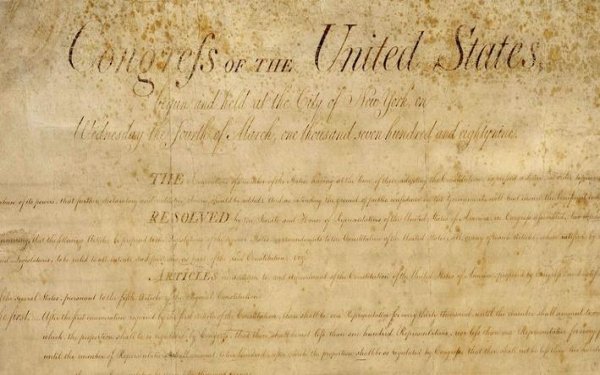
The Bill of Rights | Interactive Lesson
Explore why the Bill of Rights was added to the Constitution and its enduring impact on defining our rights. In this interactive lesson from WGBH, students develop a written argument in response to the question “How does the Bill of Rights establish and continue to define the rights we have as Americans?” They gather evidence from videos featuring historian Ben Weber and from primary source documents. This resource was originally developed for the Writing in U.S. History collection, the Calderwood Writing Course: U.S. History.

The Brain with David Eagleman | Interactive
What's the story of one of our body's most complex organs? In this interactive, viewers can explore clips from each of the six episodes of The Brain with David Eagleman. Whether hoping to understand how the brain develops or how it perceives the world around us, viewers can gain a deeper understanding of who we are and who's in control.

What Is Weather? | Interactive Lesson
Students learn about four factors that describe different types of weather—temperature, wind, precipitation, and sunlight and clouds—as they explore various weather conditions and find evidence that describes each type of weather in this interactive lesson by GBH. Interactive activities engage students as they observe and identify evidence of changing weather conditions and record factors evident in various types of weather.

The Louisiana Purchase | Interactive Lesson
Explore the motivations for the Louisiana Purchase, as well as the terms of the purchase and its consequences. In this interactive lesson from WGBH, students develop a written argument in response to the question “Do you agree that the Louisiana Purchase was a ‘most splendid’ event?” They gather evidence from videos featuring historian Ben Weber and from primary source documents, images, and maps. This resource was originally developed for the Writing in U.S. History collection, the Calderwood Writing Course: U.S. History.

South America Interactive Map
In this interactive map produced by WGBH, explore the continent and countries of South America. Through political, physical, population, and climate map layers and individual country views, learn about the boundaries that define the continent's 12 sovereign states and one overseas region, the geologic features that shape its landscape, and the people who inhabit its urban centers and remote villages. Note: Population figures are from approximately 2012.

The Columbian Exchange | Interactive Lesson
In this interactive lesson supporting literacy skills in U.S. history, students watch video dramatizations that tell the story of the Spanish explorers who arrived in the Americas with Columbus and introduced European, African, and Asian plants and animals to the Western Hemisphere. Students explore how the Columbian Exchange impacted life on both sides of the Atlantic. During this process, they read informational text, learn and practice vocabulary words, and explore content through videos and engagement activities.

Work Zone: Interactive Hospital
Students will connect schoolwork with real work as they explore a virtual representation of a hospital with specific work areas labeled and defined.

The Energy Lab Interactive
Use scientific data to design renewable energy systems for cities across the U.S., in this interactive from the NOVA Energy Lab. In the research challenge, investigate what energy is, how it can be converted into useful forms, and why some sources are running low. You'll also have the chance to compete with others to see whose designs can produce the most power. UPDATE: As of 7/7/16, the Los Angeles NREL site that feeds data into the Energy Lab is down. The live data feed is currently being replaced with historical data.
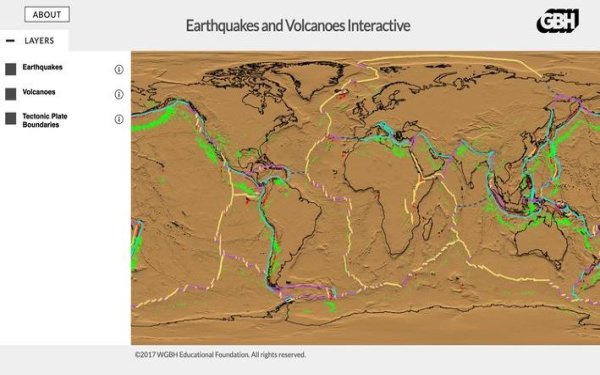
Earthquakes and Volcanoes Interactive
Explore the patterns and relationships among the locations of tectonic plate boundaries, mountain ranges, volcanoes, and earthquakes on the planet. Use this resource to visualize data and provide opportunities to develop and use models.

Key Battles of the Revolutionary War
Explore key battles of the American Revolution through an interactive battle map featuring the battles: Lexington and Concord (1775) Bunker Hill (1775) Quebec (1775) Long Island (Brooklyn) (1776) Trenton (1776) Brandywine and Germantown (1777) Saratoga (1777) Monmouth (1778) Charleston (1780) Cowpens (1781) Siege of Yorktown (1781) Students learn more about the geographic locations of these battles, military strategy, key figures (leaders and civilians), outcomes, and other interesting facts to help answer the essential question: How did key battles impact the outcome of the American Revolution? Students are encouraged to make connections between individual battles and the broader fight for independence.
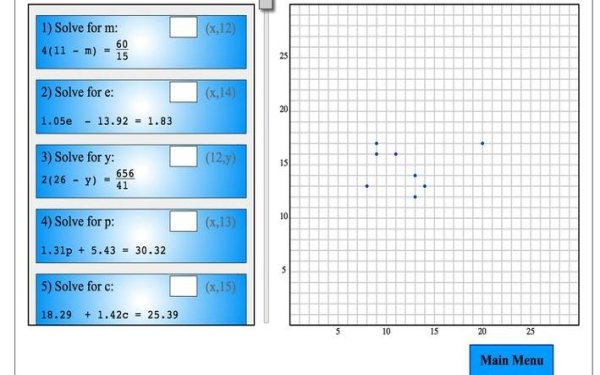
Make It Math
Solve the problems online and watch an image appear on the coordinate plane. This interactive exercise can be set up by you or your teacher to focus on a range of algebraic or computational skills. This activity was submitted through the Innovation Math Challenge, a contest open to professional and nonprofessional producers.